
Federal Courts and the Government Shutdown
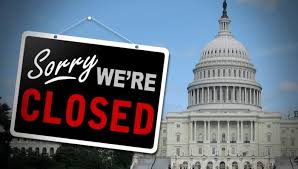
Americans woke up on Saturday to a government shutdown. (For the curious, “shutdown” is a noun, while “shut down” is a verb.) According to CNN, this is the 18th shutdown since 1976, but the first modern shutdown where the same party controlled Congress and the White House.
If you are like me, you woke up Saturday with several burning questions: (1) Will my mail arrive? (2) Will TSA be working? (3) Can I hike in the national forest that I live near? And most importantly, (4) Will the federal courts be open? As it turns out, the answer to nearly all those questions is “yes,” although the visitor’s center is probably closed at the national forest. According to the Administrative Office of the U.S. Courts, “Despite a government shutdown, the federal Judiciary will remain open and can continue operations for approximately three weeks, through February 9, by using court fee balances and other funds not dependent on a new appropriation.” While hearing and filing dates may need to be changed if a federal government attorney on a case if furloughed, the actual courts and the Case Management/Electronic Case Files system remain open.
If the shutdown extends past three weeks, “the Judiciary would then operate under the terms of the Anti-Deficiency Act, which allows work to continue during a lapse in appropriations if it is necessary to support the exercise of Article III judicial powers.” This would result in each court determining what level of staffing is necessary. In a report by the Congressional Research Service on government shutdowns, the researchers noted that,
During the FY1996 government shutdowns, the federal courts generally operated with limited disruption to their personnel. In the absence of appropriated funds, the judiciary used fee revenues and “carryover” funds from prior years to support what it considered its essential function of hearing and deciding cases. Internal judiciary guidelines, according to the official publication of the U.S. courts, recognized the “unique function of the Judiciary” and anticipated that all activities “essential to maintain and support the exercise of the judicial power of the United States during a funding lapse” would continue. The funding lapse, however, did affect some court functions, with some judges entertaining motions for continuances in civil cases and at least one district court announcing it would not start any new civil jury trials. An appellate court, it also was reported, had to reschedule several arguments because government lawyers were unable to attend. During the November 1995 government shutdown, lack of funding resulted in furloughs of most of the staff of the federal judiciary’s two support agencies, the Federal Judicial Center and the Administrative Office of the U.S. Courts. During the second shutdown, prior to the judiciary’s decision to use fee revenues and carryover funds to continue essential functions, some courts did furlough personnel “on a limited basis.” (footnotes omitted)
It will be interesting to see how many arguments need to be rescheduled in the federal appellate courts. The Supreme Court isn’t scheduled to hear arguments again until mid-February, so hopefully things will be settled by that time and set arguments won’t be impacted.