
A “Writer’s Toolbox” – Part I (A Practical Writing Library)
As lawyers, we work in words. In “The Simple Secrets for Writing a Killer Brief,” Daniel Karon encourages us to have a “writer’s toolbox.” In his article, Mr. Karon lists the books in his toolbox, which he describes as “a modest but functioning writing library.”
While I also have a “modest but functioning writing library,” I use more than books to help me write. Over the next several posts, I will explore different facets of my writer’s toolbox. I will describe my electronic writing bank, writing journal, and tech tools.
Today, I focus on my writer’s library.
I have shelves full of books on writing. Some of these books, if I’m honest, I never open. Others are well-worn with use. Below are some of my favorite writing resources:
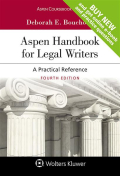
This book does more than list grammar rules. It provides writing and proofreading tips specifically for legal writing. I like that it incorporates legal-citation rules for capitalization and abbreviations along with the grammar mechanics. The index is thorough and helps me quickly locate what I need in the text.
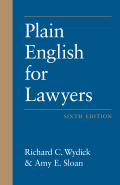
This is my “Strunk and White” for legal writing. It is a simple, short, and straightforward guide to writing well. Read this book. Implement its suggestions. You will become a better writer.
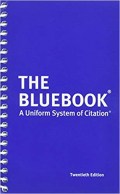
The Bluebook – A Uniform System of Citation (20th Edition) compiled by the editors of the Columbia Law Review, the Harvard Law Review, the University of Pennsylvania Law Review, and the Yale Law Review [ISBN 978-0-692-40019-7]
My clerkship with the Pennsylvania Supreme Court taught me that judges care about citation. Judges are meticulous about citation in their writing and respect attorneys who are as well.
I cut through the massive amount of rules in The Bluebook by using the “Quick Reference” section on the back cover, the Bluepages, and index. I tab pages for rules on cases, statutes, quotations, and abbreviations.
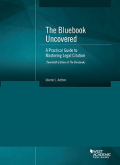
The Bluebook Uncovered: A Practical Guide to Mastering Legal Citation by Dionne E. Anthon [ISBN: 9781634595377}
This book translates The Bluebook into understandable English. It helped me comprehend some of the more complicated, convoluted citation rules. When I have a citation question, I consult this book first.
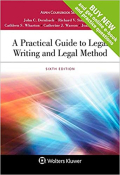
A Practical Guide to Legal Writing and Legal Method by John C. Dernbach, Richard V. Singleton II, Catherine S. Wharton, Catherine J. Wasson, and Joan M. Ruhtenberg [ISBN: 9781454889359]
This book provides step-by-step instructions for every part of the brief-writing process. It is direct and easy to understand. Each chapter contains numerous examples.
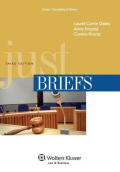
Just Briefs by Laurel Currie Oates, Anne Enquist, and Connie Krontz [ISBN: 9781454805540]
This is a great resource on persuasion. It explains how to engage the court through effective advocacy. The critiquing checklists for each section of a brief are invaluable.

Merriam-Webster Smartphone App (available on itunes & google play)
My final go-to reference is an app. I use both the dictionary and thesaurus features.

What’s in your writer’s library?
Please share your favorite resources in the comments section. I would enjoy hearing and learning from you.