
Neurodiversity and Legal Advocacy: ADD
I. Introduction
Attention Deficit Disorder is another type of neurodivergence, or different way of thinking and processing, that impacts a large segment of the population. About 8% of the population has ADD. But according to one study, over 12% of attorneys have ADD.
For years, ADD was primarily referred to as hyperactivity. It was seen as a moral problem – a failure to focus – until recent advancement have shown that it is another heritable series of traits that leads to a different way of thinking, with manageable deficiencies and valuable strengths.
II. Strengths
Bob Lobel is a legendary sports personality in Boston. He is known for his integrity, his ability to ad-lib, and his creativity. He attributes these strengths to his ADD.
“What makes me unique come straight from my ADD. I’m like the cut up in sixth grade. I thrive on chaos. I love to ad-lib. I think outside the box. Geez, I can’t think inside the box. I can change leads three seconds before airtime and make up the copy as we go on the air. This is just who I am. It comes naturally to me. That’s why I think of ADD as a gift, not as a liability.”
Edward M Hallowell, M.D. and John J. Ratey, M.D., Delivered from Distraction – Getting the Most out of Life with Attention Deficit Disorder 30 (2005).
Many attributes of people with ADD are gifts. Helping them see and nurture those gifts is key to helping them thrive in their practice.
A. Creativity
Whether because of their divergent interests, or simply because they see things differently, people with ADD are often creative in their approaches to life. As problem solvers, they tend to be holistic, and often think outside of the box. They also tend to think quickly.
B. Charisma
People with ADD are often described as being charismatic. They are empathetic, because they have had to deal with their own struggles, and tend to approach life with a sense of humor. When they focus on a person, that person knows they are being seen. And their energy and creative approach to life can be contagious.
C. Energy
Many, but not all, of those with ADD have a strong sense of energy that they have learned to harness over the years. This energy can be motivation and inspirational in a team setting, and certainly valuable in long trials and other legal efforts. In fact, many people with ADD consider themselves to do better when under pressure. They thrive on the chaos that so often arises in our legal practices.
D. Focus
When a person with ADD gets into a focused “flow” state, it is hard to shake it. Many successful scientists, writers, artists, and attorneys with ADD attribute their success to their ability to enter into a state of flow for hours on end. In fact, lawyers with ADD often say one of their strengths is the ability to focus on their work under extreme pressure.
E. Tenacity
By the time a person with ADD has their law degree, they have overcome a great deal of adversity. They have developed grit. And they are unlikely to experience serious setbacks the next time they encounter difficulty.
III. Weaknesses
For most of history, the primary effects of ADD – distractability, impulsivity, and restlessness – were seen as moral failings. As science progressed, it was discovered that ADD was a heritable trait, with physiological differences in certain regions of the brain that caused these issues. If you have a student or coworker with ADD, just telling them to “buckle down and pay attention” probably won’t work. They physically may not be able to do so. But they can learn coping mechanisms and structure.
By the time someone with ADD reaches law school, they likely have a successful suite of coping skills. But law school poses a unique challenge. There are few places where focus and discipline are more valued, and certain addictions more fostered, than in law school and the legal academy in general. And often, students and new lawyers have been plucked from their social safety nets to be placed into that environment.
One of the primary things those students need is the structure that a mentor, or group of similarly neurodivergent peers, can bring. Structure, accountability, and encouragement are important for everyone, but particularly those with ADD. Providing that in some way is vital.
In addition to providing that social support, the following are some areas of difficulty that those with ADD have found successful ways to manage.
A. Distractability
“Attention Deficit Disorder” is something of a misnomer. There isn’t so much a “deficit” of attention as a surplus that is spread a bit too thin. Coping with that surplus can take many forms.
First, good health can reduce distractability. Adequate sleep, daily exercise, and a good diet have all been shown to improve focus for those with ADD. Some supplements (like Omega 3 fatty acids) have been suggested to help as well. These all require structure, planning, and likely some encouragement. But it is worth the effort.
Many people with ADD benefit from medication. However, 20-30% of those with ADD say medication does not help. And there have been recent shortages in some medications, like Adderall. As a result, when, what, and how to take medication is a highly personal choice for those with ADD.
There are practical structural steps to take as well. ADD law students on Reddit recommend maximizing your word-processing screen so you won’t be tempted by other apps, or even just taking handwritten notes to escape electronics entirely. Some even try to turn each case into a full narrative, or illustrate the margins, just to keep themselves engaged.
B. Impulsivity
It can be difficult for a person with ADD to resist certain impulses. This includes addictions already dangerous to our profession, like drugs and alcohol. But it can also result in risk-taking and other damaging activities as they seek to scratch an itch they can’t seem to identify.
Some people with ADD may also have a condition known as Reward Deficiency Syndrome. Regular dopamine release just doesn’t quite produce the same feeling of satisfaction or pleasure for people with RDS. As a result, they are more prone to addiction and risk-taking. Diagnosis of that condition can lead to important coping skills and training, and awareness of that potential susceptibility can make it easier to confront.
C. Restlessness
When your mind wants to focus on everything, it can be hard to maintain focus on one thing at a time. In men more than women, this can manifest in hyperactivity. In women it can instead appear as “zoning out.”
The opposite side of this coin is hyper focus, or “flow.” There are time when a person with ADD is so engaged that everything else disappears and time seems to stand still. But of course, it doesn’t. And so the flow state can be equally problematic if not managed, leading to the neglect of other important things.
D. Time management
ADD makes time management difficult. This is particularly true in the law, where you need to be sure you have read through and analyzed every detail in a given case or exam question. Law students with ADD recommend seeking accommodations for extra time on exams for this reason. They must read the questions several times to catch all the details, then outline and structure the answers carefully to address them all. Then, at the end, they need time to edit out the rabbit trails.
Similarly, law students with ADD stress the need to set early deadlines. In other words, if a paper is due December 1, and that is the only deadline, there is a strong temptation to wait until November 30th to start. So setting earlier deadlines for research completion, first draft, and final edits, for instance, is key.
The same holds true in practice. Deadlines are best broken down and set at earlier increments than what is imposed by the court. And extra time and attention to reading, organizing, and editing is essential.
To help, many students and attorneys with ADD recommend apps. There are free and paid apps that help with scheduling and reminders. The “pomodoro” technique of setting timers for tasks, followed by set breaks, is often helpful, and can be managed with apps.
E. Organization
ADD and organization are not friends. Messy desks, disjointed writing, and scattered schedules are fairly common. So purposeful organization is important.
Many lawyers with ADD recommend apps for assistance with organization. As with time management, there are free and paid apps to assist with organization and to keep you on target.
F. Emotional Tolls
Being labeled an underachiever with moral failings rather than a different way of thinking takes a toll on many people with ADHD. While they have accomplished much by the time they reach law school, or get their law license, they may be saddled with a great deal of insecurity or fear of criticism.
Perhaps one of the most important things a professor, mentor, or law partner can do is encourage their student or employee with ADD. Acknowledge and see their strengths and weaknesses, help them with time management and organization and focus, and see them thrive.
Additional Reading:
Edward M Hallowell, M.D. and John J. Ratey, M.D., Delivered from Distraction – Getting the Most out of Life with Attention Deficit Disorder (2005).
AdditudeMag.com
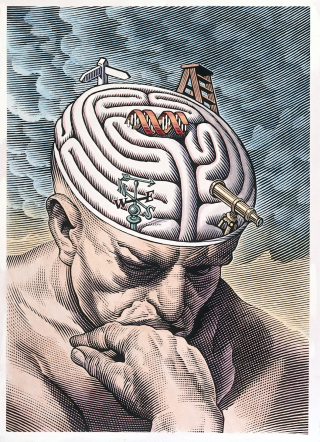
(Photo attribute: Bill Sanderson, 1997. Credit: Wellcome Collection. CC BY 4.0)